
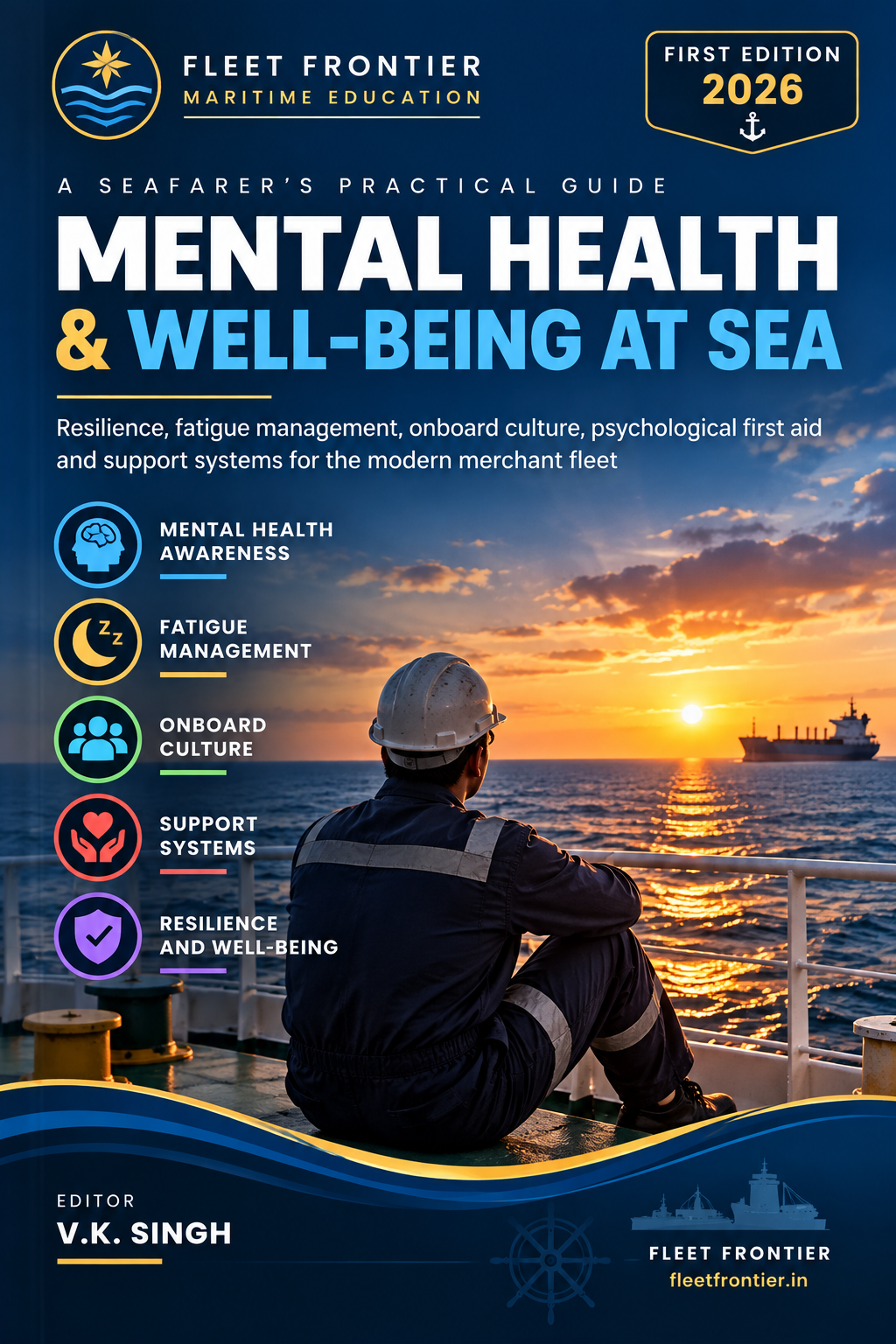
🧠 Mental Health & Well-Being at Sea
A Practical Guide for Seafarers, Cadets & Maritime Professionals
Life at sea demands more than technical knowledge and physical strength. Long contracts, watchkeeping, disrupted sleep, separation from family, demanding port operations, multicultural crews and exposure to emergencies can place significant pressure on a seafarer’s mental well-being. This Fleet Frontier eBook provides practical, maritime-focused guidance to help seafarers understand these challenges and build healthier ways of coping.
📘 What You’ll Learn
This practical guide covers:
- Understanding mental health, well-being, stress and resilience
- Recognising early signs of anxiety, depression, burnout and psychological distress
- How fatigue, sleep disruption and watchkeeping affect performance and safety
- Managing loneliness, isolation and separation from family
- Dealing with workplace stress, bullying and harassment
- Building healthy daily habits for resilience and emotional well-being
- Creating a supportive and psychologically safe shipboard environment
- Psychological First Aid (Look, Listen, Link)
- How to respond when a crewmate is experiencing a mental health crisis
- Support available through companies, families, welfare organisations and helplines
- Challenges faced by cadets, women at sea and crews working in high-risk areas
- Practical checklists, glossary and examination/viva questions for maritime students
⚓ Why Mental Well-Being Matters at Sea
Mental health is closely connected with safe shipboard operations. Fatigue, anxiety and prolonged stress can affect attention, judgement, communication and teamwork—capabilities that are essential during routine operations and emergencies. The book explains this connection through practical shipboard examples rather than treating mental health as a separate subject.
🌊 Designed Specifically for the Maritime Environment
Unlike general mental-health books, this guide discusses well-being in the context of life on board ships—including watchkeeping, limited shore leave, family separation, contract uncertainty, multicultural crews, demanding port calls and exposure to maritime emergencies. It also highlights protective factors such as good sleep, exercise, supportive leadership, crew activities, connectivity and access to confidential support.
👨✈️ Who Is This eBook For?
Ideal for:
- Merchant Navy Cadets
- Deck Cadets
- Engine Cadets
- Seafarers and Ratings
- Marine Engineering Students
- Nautical Science Students
- Marine Officers
- Maritime Professionals
- Anyone preparing for a career at sea
The book is structured for both professional development and maritime learning, with practical examples, original diagrams, checklists and exam-oriented material.
🤝 Support, Not Stigma
One of the key messages of the book is that asking for help is not a weakness. It explains how seafarers can recon warning signs, support colleagues, use available company resources and seek professional or shore-based assistance when required. The guide also includes information about welfare orgnisations and seafarer support networks.
📚 What’s Inside?
11 detailed chapters + practical appendices, covering:
- Mental Health at Sea: Why It Matters
- Understanding Common Mental Health Conditions
- Risk Factors On Board
- Research and Surveys
- Rules, Rights and Responsibilities
- Fatigue, Sleep and Hours of Rest
- Self-Care and Resilience
- Leadership and Psychological Safety
- Psychological First Aid and Crisis Response
- Company, Family and Shore Support
- Special Situations at Sea
Plus checklists, support directory, glossary, examination/viva questions and references.
🚢 Published by Fleet Frontier
Title: Mental Health & Well-Being at Sea
Publisher: Fleet Frontier
Editor: V.K. SINGH
Edition: First Edition, 2026
Website: fleetfrontier.in
Look after yourself. Look out for your shipmates. And remember: asking for help is part of professional seamanship.
Educational notice: This eBook is intended for maritime education and general well-being awareness. It does not replace professional medical or psychological assessment, emergency medical advice, company procedures, or applicable regulations.

Reviews
There are no reviews yet.